
Quick summary
Most people need a course of 6 to 8 laser hair removal sessions, spaced 4 to 6 weeks apart, to reach a lasting reduction in hair growth. Cost in Liverpool depends on the size of the area, from small areas like the upper lip through to large areas like full legs or the back. Laser gives long-term hair reduction rather than permanent removal from a single course, and results are strongest and safest when the machine is set to your skin and hair type by a trained practitioner. This guide covers areas, sessions, cost, comfort, skin types, and how to prepare.
Clinical tip from Catlin, Level 7 Aesthetic Practitioner
The single biggest factor in your results is completing the full course. Laser only affects hair that is in its active growth phase, and only a portion of your hair is in that phase at any one time. That is why sessions are spaced weeks apart, and why stopping after two or three sessions leaves a noticeable amount of hair behind.
If you have been researching laser hair removal in Liverpool, you have probably found a wide range of prices, session counts, and confident claims about permanence, with very little honest explanation of what any of it means for you. The gap between clinics offering deep discounts and clinics charging premium rates is rarely about the laser itself. It is about who is operating it, whether your skin is properly assessed first, and whether the device suits your skin and hair type.
This guide gives you the straightforward version: how the treatment works, which areas can be treated, how many sessions you will realistically need, what it costs, and how to prepare. It is based on clinical experience delivering medically-led laser treatment at Derma Cosmedic in Liverpool city centre.
How Laser Hair Removal Actually Works
Laser hair removal works by targeting the pigment (melanin) inside the hair follicle. The laser emits a specific wavelength of light that is absorbed by the pigment, converts to heat, and disables the follicle enough to slow or stop it producing new hair. When the settings are correct for your skin type, the surrounding skin is left largely unaffected.

This is why a medical-grade laser is more effective than most at-home devices and older IPL systems. It delivers a focused, consistent wavelength at a higher energy, which is what allows it to reach the follicle reliably. Different wavelengths suit different skin tones: an Alexandrite laser is highly effective for lighter skin with dark hair, while longer wavelengths such as Nd:YAG are used to treat darker skin tones more safely. Matching the wavelength and settings to your skin is exactly what a proper consultation and patch test is for.
Laser hair removal usually requires a course of treatments to be effective and does not always remove hair permanently. That honest framing matters, because it sets the right expectation before you spend anything. The NHS guidance on cosmetic procedures also stresses checking your practitioner’s training and that the clinic is reputable before you book.
Which Areas Can Be Treated and How Many Sessions Each Needs
Almost any area of the face or body can be treated. Coarser, darker hair on areas like the underarms and bikini line often responds quickly, while finer or hormone-influenced hair can take longer. As a general guide:
| Area | Typical course | Notes |
|---|---|---|
| Upper lip / chin | 6 to 8 sessions | Often hormone-influenced; may need maintenance |
| Underarms | 6 to 8 sessions | Coarse dark hair usually responds well |
| Bikini / Brazilian | 6 to 8 sessions | Sensitive area; cooling makes it comfortable |
| Full legs | 8 or more sessions | Larger area, longer appointment |
| Back / chest (men) | 8 or more sessions | Dense hair often needs the full course |
These are typical ranges rather than promises. Your exact plan depends on your hair colour, hair thickness, skin tone, and whether hormones influence your hair growth. That is assessed at your consultation.
How Many Sessions of Laser Hair Removal Will You Need?
Most people need a course of 6 to 8 sessions to reach a satisfying, lasting reduction, followed by occasional maintenance. The reason comes down to the hair growth cycle. Hair moves through three phases, and laser only works on follicles in the active growth (anagen) phase:
- Anagen (active growth): the only phase where the follicle has enough pigment for the laser to target effectively.
- Catagen (transition): the follicle begins to shrink and responds poorly to treatment.
- Telogen (resting): the hair is dormant or shedding and will not respond.
Because only a portion of your hair is in the anagen phase at any given time, sessions are spaced roughly 4 to 6 weeks apart so each appointment catches a fresh group of follicles. Facial areas are sometimes treated on a slightly shorter cycle than the body.
Not sure how many sessions your skin and hair type will need?
Book a free consultation at Derma Cosmedic, Castle Street, Liverpool. You will get a patch test and an honest assessment for your specific areas.
Laser Hair Removal Cost in Liverpool
The honest answer is that cost depends on the size of the area and whether you pay per session or book a course. A course is priced lower per session than paying individually, because a full course is what actually delivers the result. As a rough structure:
| Area size | Examples | Pricing approach |
|---|---|---|
| Small | Upper lip, chin, underarms | Lower per-session cost; course discount |
| Medium | Bikini line, lower arms, neckline | Mid-range; course recommended |
| Large | Full legs, back, chest | Higher; best value as a course |
Be cautious of prices that look unusually low. A single cut-price session on an unsuitable setting, without a proper skin assessment, can mean poor results at best and burns or pigmentation changes at worst. For exact pricing on your areas, the free consultation is the right place to get a clear, itemised figure rather than a rough online estimate.
Laser vs IPL vs Waxing: What Is the Difference?
People often confuse laser with IPL, and wonder how both compare to waxing. They are not the same:
| Method | How it works | Result |
|---|---|---|
| Laser | Single focused wavelength targets follicle pigment | Long-term reduction over a course |
| IPL | Broad spectrum of light, less targeted | Reduction, often needs more sessions |
| Waxing | Physically pulls hair from the root | Temporary; regrows in weeks |
IPL uses a broad spectrum of light and is often better suited to pigmentation and redness, whereas for hair reduction a targeted laser is usually the stronger option. The same medical-grade laser platform at the clinic is also used for other concerns, such as laser treatment for fungal nails.
Does Laser Hair Removal Hurt?
Most clients describe the sensation as a quick, warm snap against the skin, often compared to the flick of an elastic band. It is brief and passes as the handpiece moves on. Bony and more sensitive areas, such as the upper lip or bikini line, tend to feel sharper than fleshier areas like the legs.
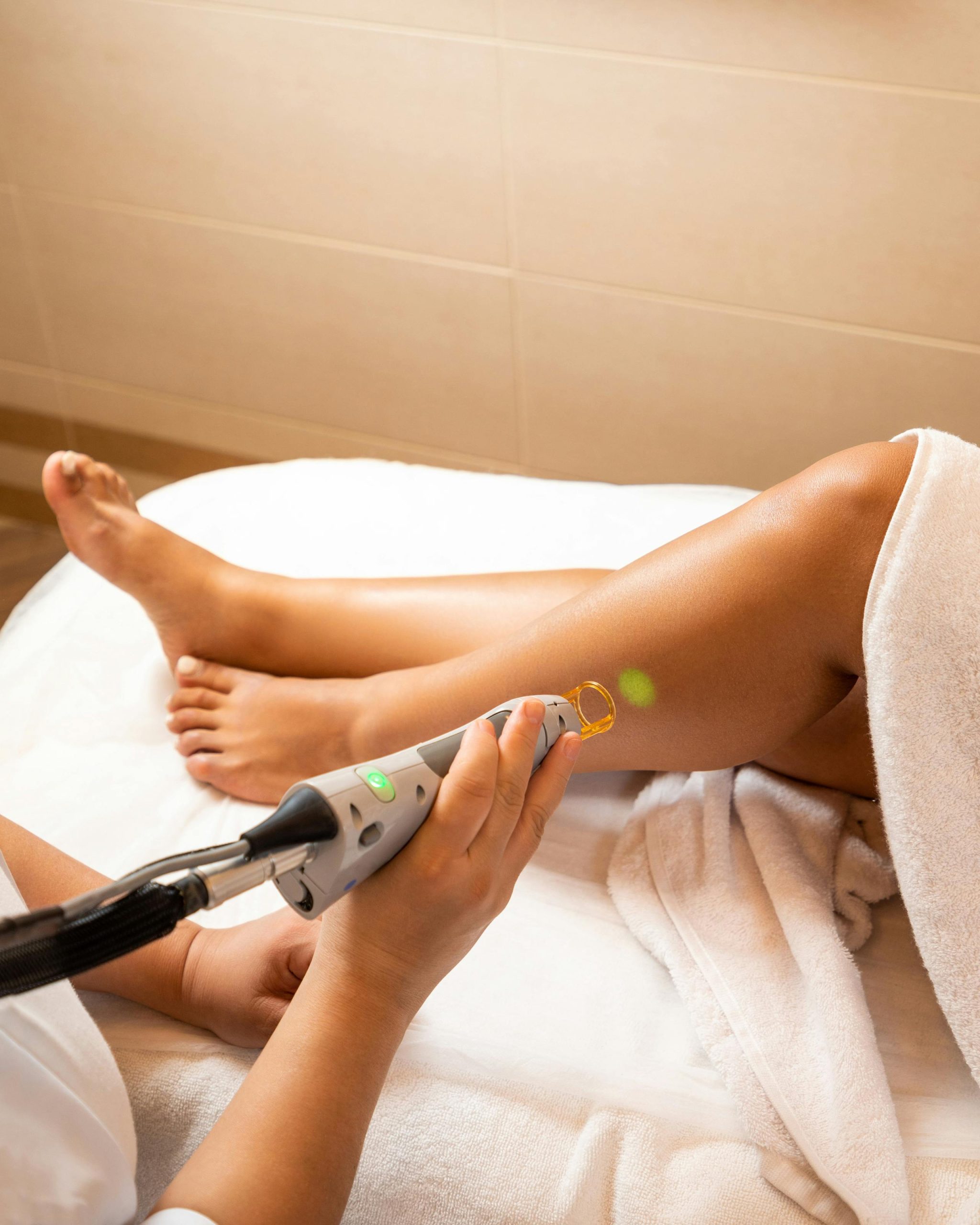
Modern lasers include a cooling system that protects the skin surface and makes treatment considerably more comfortable than older devices. Minimal discomfort is the norm rather than significant pain, and no anaesthetic is usually needed. Afterwards the area may look slightly pink and feel warm, similar to mild sunburn, which typically settles within a few hours.
Is Laser Hair Removal Permanent?
Laser hair removal produces long-term hair reduction rather than guaranteed permanent removal from a single course. A completed course significantly reduces the number of hairs, and the hair that does return is often finer and lighter. Most people find that occasional maintenance sessions once or twice a year keep the area smooth.
Hormones can influence regrowth, which is why areas affected by conditions such as PCOS, or changes during pregnancy and menopause, sometimes need ongoing top-ups. This does not mean laser will not help. It often makes a significant difference to hair density and the daily burden of managing it. It simply means the honest expectation is management and reduction rather than a permanent fix, and a good clinic will tell you that at consultation.
Skin Types, Safety and Who It Is Not Suitable For
Modern lasers can treat a wider range of skin tones than older machines, but safe treatment always depends on matching the device and settings to your skin. This is why a patch test is carried out before your first full session. Laser hair removal is generally not suitable, or needs medical clearance first, if you:
- are pregnant or breastfeeding
- have a recent suntan or fake tan on the area
- are taking photosensitising medication (some antibiotics, certain acne medications)
- have an active skin infection, cold sore, or broken skin in the area
- have very light, grey, red, or blonde hair, which contains little pigment for the laser to target
None of this replaces a professional assessment. The consultation exists to check your history, skin type, and hair type so treatment is both effective and safe.
Laser Hair Removal for Men in Liverpool
Laser hair removal is increasingly popular with men, most commonly for the back, chest, shoulders, and neckline. The same principles apply: a course of sessions, spaced weeks apart, on a machine set correctly for the skin and hair type. Coarse, dense hair often responds well because of its higher pigment, though it usually needs the full course to see the full effect.
Men treating the neckline for ingrown hairs or shaving irritation often value the comfort benefit as much as the cosmetic one, since reducing the hair reduces the daily irritation that causes it.
How to Prepare and What to Do Afterwards
Getting the best result, comfortably and safely, is partly down to preparation. Before your session:
- Shave the area the day before, so the follicle is intact but the surface hair is short.
- Avoid waxing, plucking, or epilating for the duration of your course, since the follicle needs to be present for the laser to target it.
- Avoid sun exposure and fake tan for around two weeks beforehand.
- Come with clean skin, free of make-up, deodorant, or lotions on the treatment area.
Afterwards:
- Keep the area cool and avoid hot baths, saunas, and intense exercise for 24 to 48 hours.
- Apply SPF and avoid direct sun on treated skin.
- Do not pick or scrub the area; shed hairs will fall out over the following one to two weeks.
Many clients pair a laser course with a skin-health treatment such as a HydraFacial to keep the skin hydrated and in good condition between sessions.
Laser Hair Removal at Derma Cosmedic, Castle Street Liverpool
Derma Cosmedic is based at 6-8 Castle Street, Liverpool L2 0NB, in the city centre. Our laser hair removal treatment in Liverpool is medically led, with a consultation and patch test before your first session so the laser is set correctly for your skin and hair type. That assessment is the difference between a course that works comfortably and one that risks the skin.

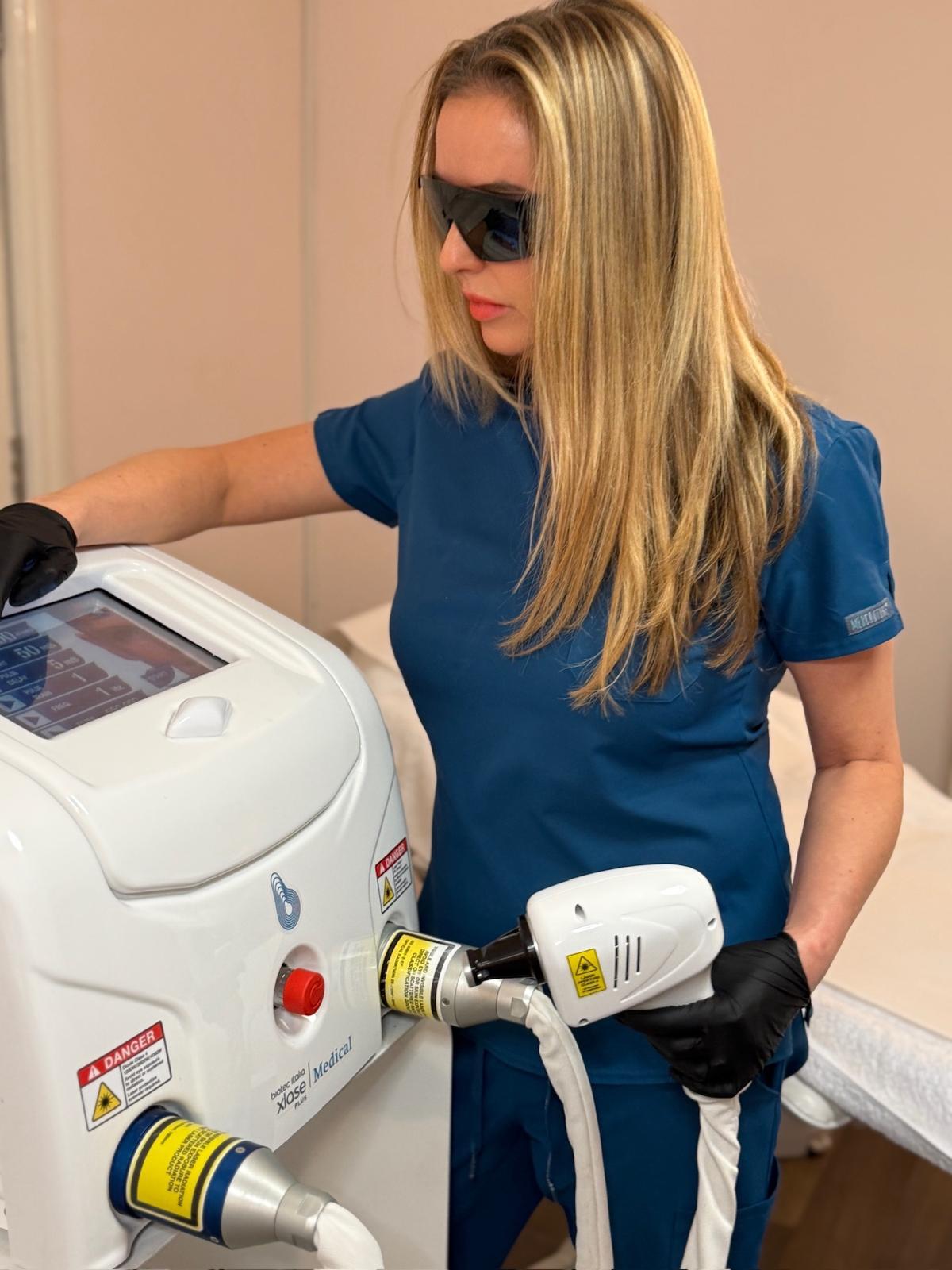
The clinic uses an advanced Alexandrite laser platform, the same technology relied on for treatments like the carbon laser facial and skin rejuvenation. Derma Cosmedic is also a training academy, so if you are a professional looking to add laser to your own clinic, you can explore the accredited training courses on offer.
Derma Cosmedic holds a 4.9-star Google rating from 89 reviews and serves patients from across Merseyside including Wirral, Southport, St Helens, and Warrington. Consultations are free, with no obligation to proceed.
Google Review
“I’ve had a few sessions of laser hair removal with the lovely Lisa. Lisa is always amazing, very friendly and bubbly and makes me feel comfortable. Lisa is professional and always explains every part of the treatment and after care. Very happy with my laser results so far.”
Hannah Vaughan, Google Review
Book Your Free Laser Hair Removal Consultation in Liverpool
Get a patch test, an honest assessment of how many sessions you will need, and clear pricing for your areas. No obligation. 6-8 Castle Street, Liverpool L2 0NB.
Call: 0151 203 7988 | Mon-Fri 9am-6pm, Sat 10am-4pm